The Value of Using a Chemical Defoamer in Different Applications
The application of chemical defoamers is a vital consideration across multiple sectors, consisting of food handling, wastewater therapy, and drugs. These representatives play a critical role in mitigating foam development, which can prevent effectiveness and compromise item top quality.
Understanding Foam Formation
Foam development is a complicated physical phenomenon that takes place when gas bubbles are caught within a fluid matrix, leading to the creation of a secure structure. This procedure can be affected by numerous elements, including the thickness of the liquid, the surface area tension at the gas-liquid user interface, and the existence of surfactants. Surfactants reduced the surface tension, promoting bubble production and stablizing, which frequently brings about the development of foam in several commercial processes.
Foams are generally come across in applications such as food manufacturing, wastewater treatment, and chemical production. In these contexts, foam can serve as an insulator, hinder blending processes, or hinder the performance of devices. The security of foam is figured out by the equilibrium in between the pressures acting to stabilize the bubbles and those that advertise their collapse.
Comprehending the technicians of foam formation is vital for successfully handling its existence in numerous systems. By understanding the underlying principles, markets can develop techniques to minimize unwanted foaming, consequently boosting operational performance and item top quality. This foundational understanding works as a precursor to checking out the energy of chemical defoamers, which especially deal with foam-related obstacles in countless applications.
Advantages of Chemical Defoamers
Chemical defoamers offer considerable benefits throughout numerous industries by successfully managing and lowering foam formation. By minimizing foam, chemical defoamers help maintain optimal manufacturing prices and lower downtime linked with foam monitoring.
In addition, chemical defoamers add to enhanced product quality. Foaming frequently brings about incongruities in formulas, which can detrimentally influence the last product. By controlling foam degrees, defoamers make certain uniformity, consequently enhancing the total high quality of the output.
Cost-effectiveness is an additional significant advantage (Chemical Defoamer). By decreasing the quantity of resources needed for manufacturing and decreasing waste, chemical defoamers can cause significant savings. Furthermore, they typically enable for minimized energy intake, as procedures can run extra efficiently and call for less intervention.
Applications in Food Processing
In the food processing sector, reliable administration of foam is important to make certain both product top quality and operational efficiency. Foam can hinder different procedures, from mixing and mixing to product packaging, resulting in lowered yields and possible contamination. Chemical defoamers play an important function in minimizing these issues by swiftly breaking down foam, enabling smoother procedures and enhanced product uniformity.
In applications such as dairy products handling, defoamers prevent excess foam formation throughout the production of cheese, milk, and yogurt, which can interrupt equipment and impact the appearance of the end product. In brewing and fermentation procedures, foam control is vital to maintain the integrity of the drink and make sure optimum fermentation rates.
In addition, chemical defoamers are utilized in food dressings, sauces, and emulsions to improve the security and look of the end products. By decreasing foam throughout manufacturing, suppliers can attain far better blending and diffusion of ingredients, resulting in exceptional more high quality. In general, the incorporation of chemical defoamers in food processing is indispensable for preserving efficiency, quality, and safety in food read here manufacturing.
Duty in Wastewater Treatment
Effective foam management is just as vital in wastewater therapy processes, where excessive foam can hinder procedures and make complex the treatment of effluents. In numerous wastewater treatment facilities, foam can create as an outcome of biological activity, surfactants, or various other natural materials existing in the influent. This foam can lead to a series of functional obstacles, consisting of decreased treatment efficiency, enhanced upkeep requirements, and prospective regulatory compliance problems.
Chemical defoamers play an important function in reducing these obstacles. By minimizing the surface stress of the liquid, defoamers promote the collapse of foam frameworks, therefore helping with smoother operation of devices such as aeration storage tanks and clarifiers. Their prompt application helps keep ideal hydraulic problems, improving the total effectiveness of solids separation procedures.

Effect On Pharmaceutical Manufacturing
Foam control is critical in pharmaceutical manufacturing, where the existence of too much foam can disrupt manufacturing processes and compromise item top quality (Chemical Defoamer). The development of foam throughout various phases, such browse around here as blending, blending, and fermentation, can bring about inefficient mixing, insufficient warmth transfer, and also equipment damages. These issues not just result in operational hold-ups however can likewise trigger significant economic losses and impact conformity with rigorous regulatory standards
Chemical defoamers are particularly developed to reduce these obstacles. By effectively reducing foam development, they enhance procedure effectiveness and preserve the honesty of the end product. Particularly, defoamers guarantee regular dosage forms, enhance the security of solutions and suspensions, and enhance cleaning procedures by avoiding foam accumulation in equipment.
Furthermore, using defoamers can optimize the return of energetic pharmaceutical ingredients (APIs) by advertising better removal and purification procedures. As pharmaceutical business make every effort to enhance item top quality while minimizing production prices, the duty of chemical defoamers becomes significantly crucial - Chemical Defoamer. Their unification into producing methods not just supports conformity with Excellent Manufacturing Practices (GMP) however likewise fosters development and competitiveness in a swiftly progressing market

Verdict
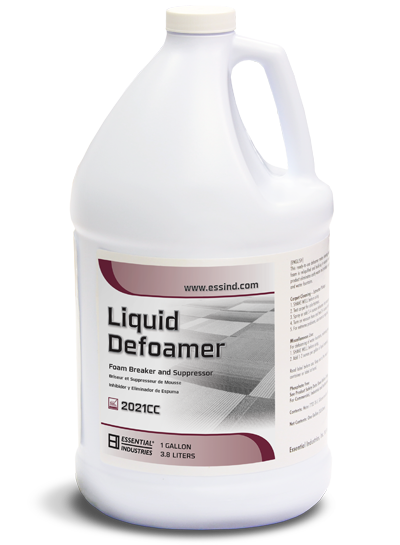
Chemical defoamers supply significant advantages across different sectors by efficiently controlling and decreasing foam development. By reducing foam, chemical defoamers help preserve ideal production rates and decrease downtime associated with foam administration. Chemical defoamers play a crucial function in reducing these concerns by swiftly breaking down foam, permitting for smoother procedures and boosted item uniformity.
Effective foam management is equally essential in wastewater treatment processes, where excessive foam can impede procedures and make complex the therapy of effluents.Foam control is vital in pharmaceutical production, where the visibility of excessive foam can disrupt manufacturing procedures and concession item high quality.